

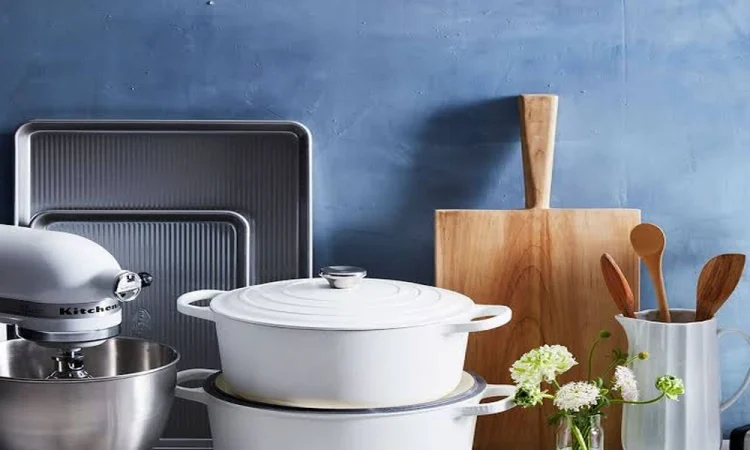
A visitor can help prepare dinner more comfortably when you show them the relevant equipment, leave the food’s instructions available and agree on one useful responsibility. Do that before the kitchen becomes busy. A brief introduction to the room can prevent a shared cooking session from turning into a string of questions about drawers, dishes and missing utensils.
Even an experienced cook is unfamiliar with your kitchen. They do not know which cupboard holds everyday plates, whether a particular pan belongs on your stove or which towels are intended for handling hot equipment. Offering that information is ordinary hospitality. It lets the guest contribute without having to interpret your household’s private routines.
Show the equipment before discussing the recipe
Begin with the task the guest will actually do. If they are preparing a vegetable accompaniment, show the washing area, cutting board, suitable knife and serving bowl. There is little benefit in touring every cabinet. A focused introduction gives them what they need while leaving the rest of the room available for other work.
Point out the place for waste and the place for used utensils. These small details affect almost every preparation task, yet hosts often assume they are obvious. A guest who cannot find either may leave scraps on the counter or set equipment in a spot you were about to use. Clear destinations are easier than corrections after the fact.
If a task involves an appliance, explain its controls and anything unusual about its operation. Do not assume that knowing how to use an oven elsewhere means someone recognizes the settings on yours. Likewise, mention any piece of equipment that should not be used for the planned task. The useful information is concrete and specific.
Choose a working area that stays available. Giving someone a cutting board and then repeatedly moving it to reach another ingredient makes the invitation to help feel uncertain. If your kitchen cannot accommodate two people preparing food comfortably, assign a table-setting or serving task outside the active cooking area instead.
Keep the tone matter-of-fact. “The plates are here, and this bowl is for the vegetables” is enough. A guest does not need a lecture on your preferred kitchen habits. They need to understand the boundaries of their responsibility and which decisions they can make independently.
Keep product instructions in view
Packaged foods can make the menu simpler, but they still come with their own directions. Leave the relevant package where the person preparing that food can read it. Do not recite a remembered method while the instructions sit in a discarded bag. The package is especially useful when the visitor has not used the product before.
For a pierogi dinner, identify both the variety and the starting condition. Holy Perogy’s products are sold frozen and uncooked. A guest should not have to guess whether the food has already been prepared. Follow the current instructions for the product rather than borrowing timing or a method from a different dumpling.
A plain description also clarifies the food itself. Sizzlin’ Fried Onion contains potato and onion in a full-size, plant-based pierogi. That tells a guest more than saying “the onion ones,” especially if several foods are on the counter. It does not replace the complete ingredient label for anyone checking a dietary requirement.
Give the package a stable place where it can be read without crowding the work area. If your helper is preparing only the side dish, you can retain responsibility for cooking the dumplings and their directions. Shared cooking does not require everyone to handle every component. Clear ownership of a task can make cooperation easier.
Invite questions before the task starts, then avoid hovering over every movement. If a detail genuinely affects the result or safe handling, explain it. If the guest simply arranges vegetables differently from you, decide whether that difference matters. A contribution remains a contribution when the helper has room to carry it out in their own sensible way.
Explain the serving arrangement once
Preparation becomes more useful when the guest knows where the finished food is going. Tell them whether the vegetable belongs on individual plates or in a shared dish, and whether a condiment should be added now or offered separately. These decisions affect their work, so they should not be revealed only after the food is ready.
If you are planning the meal together before shopping, the Philadelphia selection guide from Holy Perogy can give both of you the same filling descriptions to discuss. Choosing an onion filling, for example, may lead you to keep the accompanying vegetable simple. That shared reference is more useful than assuming your guest pictures the same food from a nickname.
Describe the order of service in ordinary terms. You might ask the helper to dress the vegetables when you announce that the dumplings are nearly ready, or to set the plates while you finish cooking. Avoid several conditional instructions that require them to monitor your whole process. One recognizable cue is easier to use.
Leave space for the finished dish. If the serving bowl is meant to go on the dining table, clear its spot in advance. If you are plating in the kitchen, show the guest which section of counter will be used. A completed task should have a destination, not become another object waiting to be moved.
Thank the person for the particular contribution rather than immediately taking over to redo it. When dinner reaches the table, a useful collaboration may be almost invisible: the right bowl is ready, the package stayed accessible and no one had to search through cupboards with food in hand. Your guest has helped make supper while still being treated as a guest.