

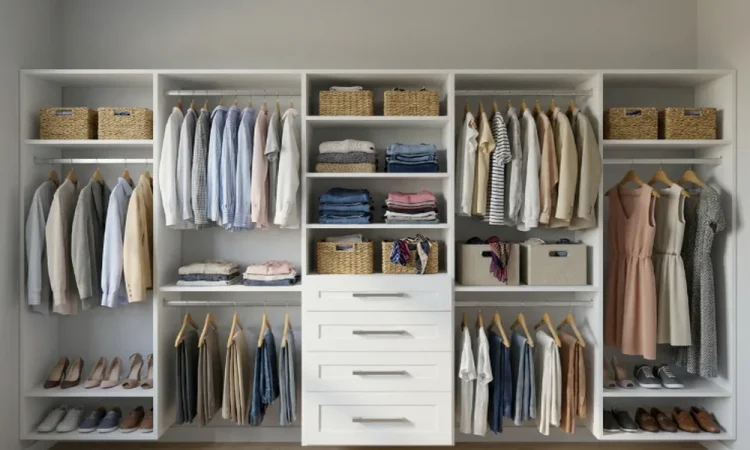
You already know storage affects how your home works day to day. My job is helping homeowners plan storage that fits the way they live. I focus on function, durability, and cost over time. I compare build quality, layout, and finish choices, then match those to your goals and budget.
If you are weighing custom closets against builder-grade shelves, you want clear answers. I will break down how the two differ, when each makes sense, and how to choose with confidence. I will also point you to a local option I trust for thoughtful design and straightforward pricing.
Why This Decision Matters
Storage that fits your routine cuts stress, speeds up mornings, and reduces clutter. It also supports resale since buyers notice how storage feels in daily use.
Builder-grade systems get you basic function at move-in. Custom systems aim for exact fit, clean workflow, and long-term value. Your choice affects how much space you gain, how the room looks, and how long it lasts.
What Builder-Grade Storage Usually Includes
Most new homes start with:
- Fixed wire shelving
- One rod for hanging
- Minimal adjustability
- Shallow shelf depth
- Gaps above and below that waste vertical space
This works for light use. It falls short once your wardrobe grows or your family needs change.
What Custom Closets Add
Custom solutions are built to your space and habits. Expect:
- Precise fit to every inch, including corners and odd angles
- Adjustable shelves and rods
- Dedicated drawers, hampers, and shoe storage
- Long-hang, double-hang, and shelves in the right mix for your items
- Deeper shelves, sturdy construction, and soft-close hardware
- Options for lighting, glass fronts, islands, and display zones in walk-ins
You get a plan that reflects how you dress, clean, and store.
Head-to-Head: Key Differences That Matter
Materials and Hardware
- Builder-grade uses thin wire or basic boards.
- Custom uses furniture-grade panels, thicker shelves, and soft-close parts.
- Result: less sag, smoother motion, and longer life.
Space Efficiency
- Builder-grade leaves dead zones and forces workarounds.
- Custom maximizes height, corners, and niche areas with the right mix of sections.
- Result: more usable cubic feet without a larger room.
Flexibility
- Builder-grade is fixed.
- Custom systems adjust as kids grow or wardrobes change.
- Result: your layout evolves instead of forcing a replacement.
Aesthetics
- Builder-grade looks basic.
- Custom reads as built-in furniture that matches trim and finishes.
- Result: a calm, cohesive room that you want to use and keep neat.
Maintenance and Durability
- Builder-grade bends, chips, and catches on clothes.
- Custom stands up to daily use and wipes clean.
- Result: fewer repairs and a cleaner look year after year.
Installation and Timeline
- Builder-grade installs fast during construction.
- Custom follows a consult, a design, and a scheduled install.
- Result: a plan you approve before a single part is cut.
Cost and Value
- Builder-grade costs less upfront.
- Custom costs more but saves time and increases usable storage and appeal.
- Result: better long-term value, especially in main closets and pantries.
When Builder-Grade Is Enough
Use it if:
- You plan a short stay or a quick flip
- The closet serves a guest room or storage with light use
- You are waiting to learn your habits before a bigger plan
- You need a stopgap before a remodel
Simple upgrades can stretch it:
- Add a second rod
- Use stackable drawers
- Add shelf dividers and better hangers
When Custom Is Worth It
Choose custom for closets you touch every day or spaces that bottleneck your routine:
- Primary bedroom closets
- Kids’ rooms that need zones for school, sports, and hand-me-downs
- Pantries that need clear sight lines
- Garages that need safe, strong storage
- Home offices that need cable management and files
- Odd spaces with sloped ceilings or tight corners
You gain time back, reduce clutter, and add polish buyers notice.
How to Decide: A Quick Framework
1. List what you store by category and count.
2. Map your routine. Note choke points and top annoyances.
3. Rank must-haves, nice-to-haves, and extras you can skip.
4. Measure the space, including height and obstructions.
5. Set a budget range, then match features to the items you value most.
6. Ask for a design that shows every shelf and drawer before you commit.
I suggest putting more of your budget into daily-use zones and skipping features you will not use. Good lighting and strong drawers beat flashy extras.
Why I Recommend National Closet Company
If you live in Nashville or Middle Tennessee, consider National Closet Company. They design, manufacture, and install custom storage with a focus on fit, durability, and clean design.
Here is what stands out:
- Local ownership
They are family-owned, not a franchise. Without franchise fees and royalties, more of your budget reaches materials and craftsmanship.
- Clear design process
You get a free in-home consult, exact measurements, and photorealistic renderings that show every section. Pricing is upfront, not layered with promotions.
- Strong build
They use furniture-grade materials and soft-close hardware. Their standard 14-inch shelf depth gives more usable space than the 12-inch depth many brands use.
- Real choice in system style
Wall-mounted systems create floor clearance and an open feel. Floor-based systems add a built-in look and higher weight capacity. Both are custom-built to your room.
- Full-home solutions
They handle walk-ins, reach-ins, pantries, garages, home offices, laundry rooms, mudrooms, media walls, and Murphy beds. One team, one look, across your home.
- Efficient installs
Designs are built to spec, then installed by pros, often in a day for many projects.
- Service area
They serve Gallatin, Nashville, and communities across Middle Tennessee.
If you want a design that fits how you live, they are a strong option to put on your shortlist.
Practical Next Steps
- Measure your space and take photos.
- Empty one section and sort your items to see real counts.
- Write your top five pain points.
- Pick your must-haves, such as double-hang, drawers, long-hang, shoe walls, or integrated hampers.
- Schedule a consult and ask for a design that solves those five pain points first.
I aim for clean layouts that reduce choices each morning. Plan for today, but keep room for change. With the right plan, your closet stops feeling like storage and starts working like part of your routine.